Abacus & Vedic Maths for Kids: What It Is and Why Apollo Teaches It From Class 1
A parent's guide to Abacus and Vedic Maths at Apollo Public School, Sunkadakatte — what each program actually teaches, and why it runs from Class 1 through High School.
24 September 2026
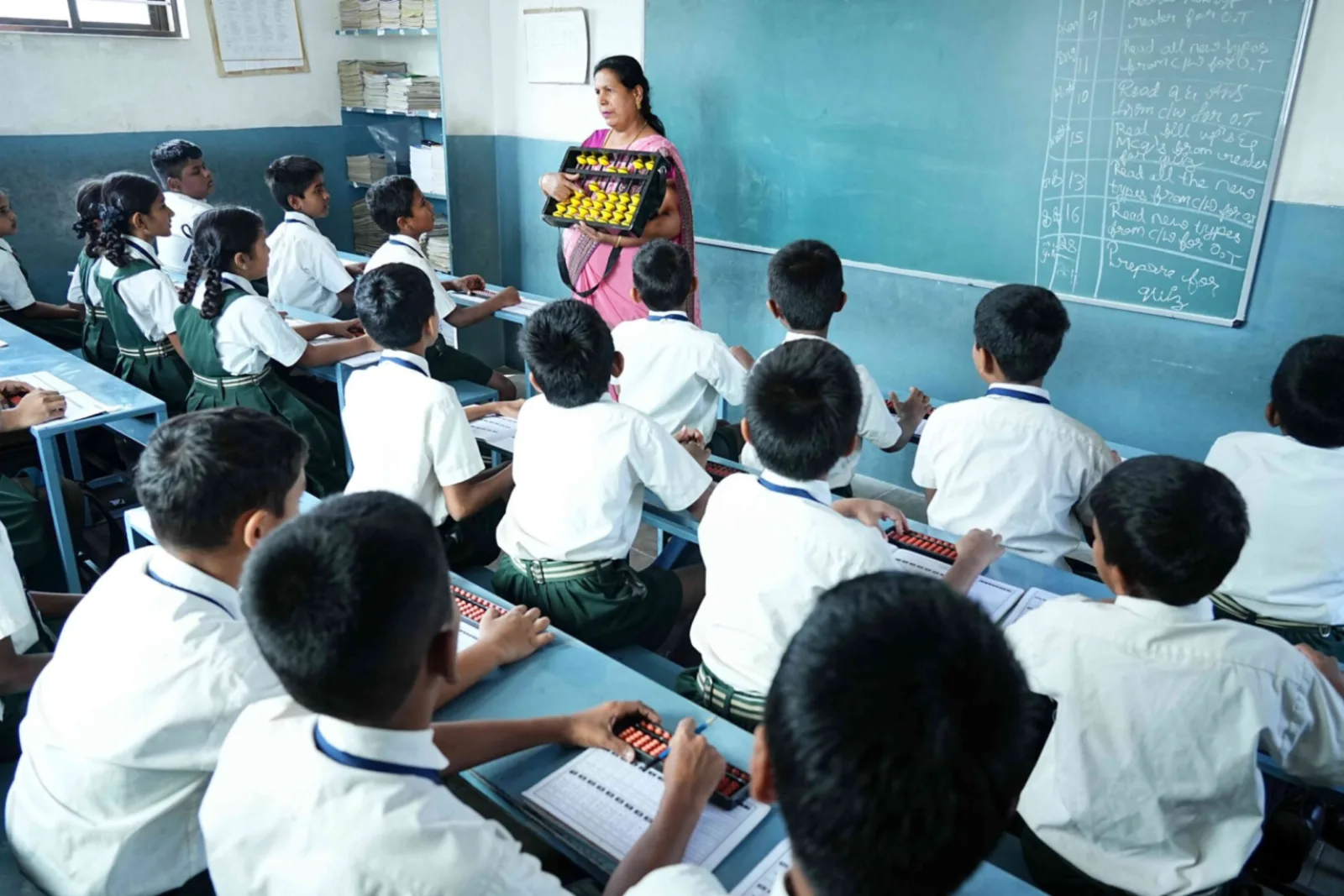
If you’ve walked past a Primary Wing classroom at Apollo Public School and seen a row of children moving beads on small wooden frames with total concentration, you’ve seen Abacus in action. A few years later, those same students are working through mental shortcuts for multiplication and division that most adults never learned. That’s Vedic Maths. Together, they form one of the most distinctive parts of the education a child receives at Apollo — and parents often ask us the same two questions: what exactly are these programs, and why do we start so early?
What Is Abacus, and Why Class 1?
Abacus, as taught at Apollo, runs through Class 1 to Class 5 — the full length of the Primary Wing. It uses a simple, ancient calculating tool: a frame of beads that a child learns to manipulate to represent numbers and perform arithmetic. What looks like a toy is actually a structured way to train two things at once — concentration and mental arithmetic.
Young children often find sustained focus difficult. Abacus training asks a child to track numbers, follow a sequence of bead movements, and hold a running total in their head, all at the same time. Over months of practice, this builds a kind of mental discipline that carries well beyond the maths period — into reading comprehension, following multi-step instructions, and sitting through a full class without losing the thread.
The arithmetic side matters just as much. By the time a child moves on from Abacus, they’re often able to work through addition, subtraction and small multiplication problems mentally, without reaching for a calculator or even writing the numbers down. That’s not a party trick — it’s the foundation the next stage builds on.
What Is Vedic Maths, and Why Class 6 Onward?
When students move into High School at Apollo, from Class 6 through Class 9, they take up Vedic Maths. Where Abacus is a physical tool, Vedic Maths is a set of calculation techniques — faster, more efficient methods for working through multiplication, squaring, division and more, drawn from a tradition of Indian mathematical shortcuts.
The goal here is different from Abacus, though related. Older students are facing more demanding maths — algebra, geometry, more complex arithmetic — and a slow, laborious calculation process can make maths feel harder than it needs to be. Vedic Maths techniques let a student arrive at an answer in a fraction of the steps a standard method would take. For a student who has always found maths a little intimidating, this often changes the relationship entirely: problems that used to take a full minute of working now take seconds, and that speed builds a kind of confidence that’s hard to manufacture any other way.
Why Apollo Teaches Both, as One Progression
The reason Apollo runs Abacus and Vedic Maths back-to-back, rather than choosing one, is that they solve different problems at different ages. A six-year-old doesn’t need faster algebra shortcuts — they need to build number sense and the patience to work through a calculation step by step. A twelve-year-old, on the other hand, already has that foundation and needs speed and confidence to keep up with a harder syllabus.
Seen together, the two programs form a single thread that runs through a student’s entire time at Apollo: start with the physical, hands-on discipline of Abacus in the early years, and graduate into the faster, more abstract techniques of Vedic Maths as the curriculum gets harder. A student who has gone through both arrives at their SSLC years with genuine comfort around numbers — not because they were told maths is important, but because they’ve spent years training the specific skills that make it easier.
Part of a Bigger Picture
Abacus and Vedic Maths aren’t a bolt-on extracurricular at Apollo — they run alongside the regular State Board curriculum, across the Nursery, Primary and High School wings that have been part of the school since it was founded in Sunkadakatte in 1991. They sit next to the school’s other enrichment programs — Karate, Yoga and daily meditation — as part of what we mean when we talk about educating the whole child, not just preparing them for exams.
If you’re weighing where to send your child and want to see this in practice rather than just read about it, the best next step is to visit. Our team can walk you through what a Primary Wing Abacus class and a High School Vedic Maths session actually look like, and answer any questions specific to your child’s age and starting point.
Explore our full Abacus & Vedic Maths program →
You can also see how these programs fit alongside our full academic curriculum, or get in touch directly to schedule a visit and start the admission process for your child.
See the full Abacus & Vedic Maths program page
Explore Abacus & Vedic Maths